950 Years of History
A Fortress That Became a Home
No other castle in the world has been continuously occupied for so long. Trace Windsor's story from Norman earthworks to the modern monarchy.
- 1070–1154
The Norman Fortress
William the Conqueror chose a chalk bluff above the Thames for a motte-and-bailey castle, part of a ring of defences around London. Henry I held court here, and the castle began its transformation from timber fort to royal residence.
- 1165–1350
Stone Walls & Sieges
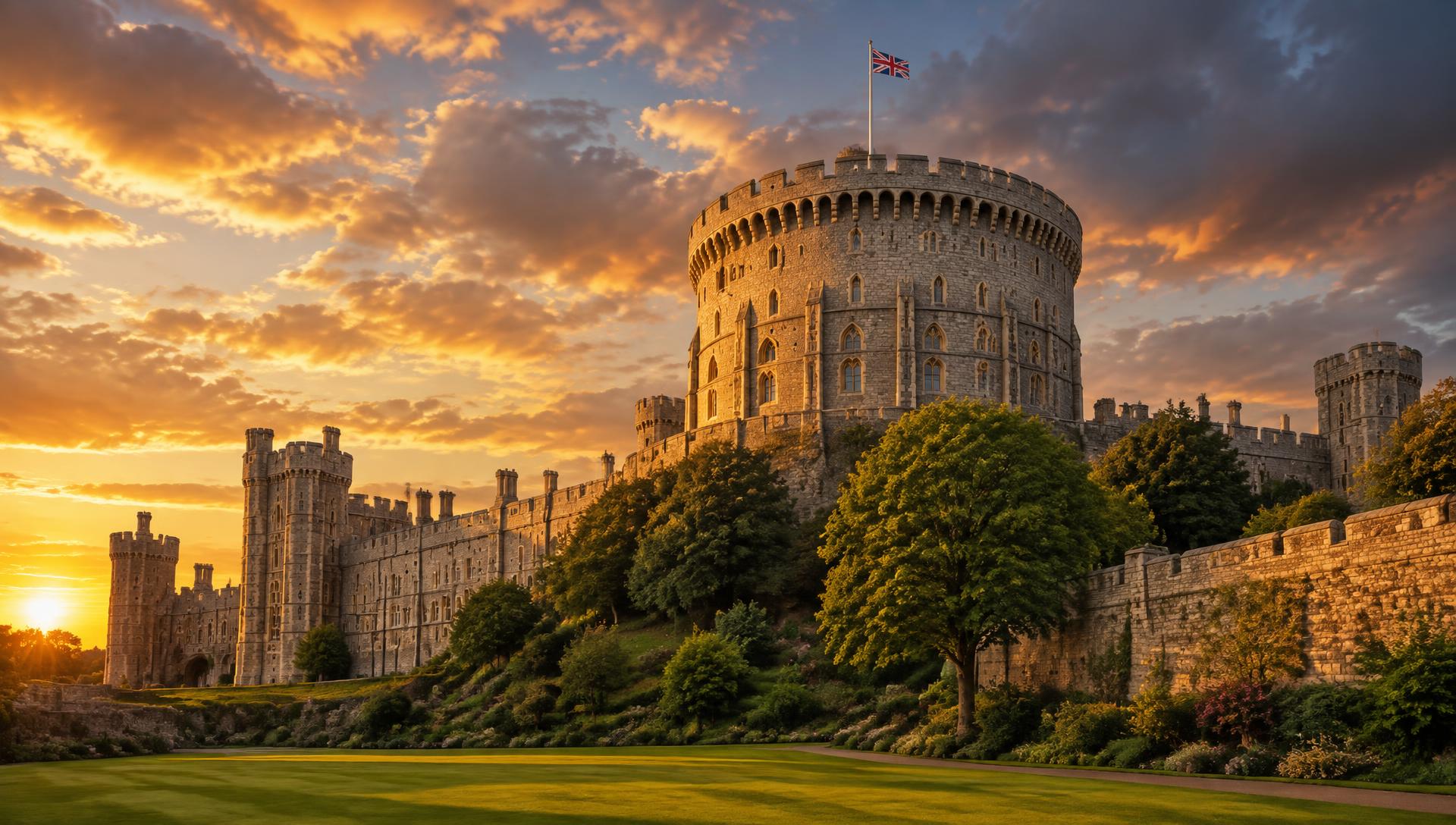
Henry II rebuilt the castle in stone, raising the great Round Tower on the motte. Windsor withstood a two-month siege during the First Barons' War in 1216, and Edward III — born at Windsor in 1312 — later lavished it with new buildings.
- 1348
The Order of the Garter
Edward III founded the Order of the Garter, England's oldest and most senior order of chivalry, with St George as its patron. The chapel he began would become St George's Chapel, the order's spiritual home to this day.
- 1475–1660
Tudor Splendour
Edward IV began the present St George's Chapel in 1475. Henry VIII, who is buried in the chapel beside Jane Seymour, added the great gate that bears his name. Elizabeth I used Windsor as a refuge and knew it 'was a place able to stand a siege if need be.'
- 1660–1830
Restoration & Regency
Charles II modernised the State Apartments in Baroque style after the Restoration. George IV then commissioned Jeffry Wyatville to remodel the entire castle, giving Windsor the romantic Gothic skyline — including the raised Round Tower — seen today.
- 1837–1992
Victoria to the Modern Age
Queen Victoria made Windsor her principal home, and it remained the monarchy's favoured weekend residence. In 1992 a devastating fire swept through the State Apartments; a five-year restoration returned them to glory, finished in 1997.
- Today
A Working Palace
Windsor remains an official residence of the Sovereign. Queen Elizabeth II spent most of her private weekends here and was laid to rest in St George's Chapel in 2022. The castle welcomes well over a million visitors each year.